
2026/7/22 ・ Yuki Nakamura
Crack the Code with Japanese Language Learning.

Many people think of programming as a universal language of its own, built on logic and syntax that transcends borders. Yet when you dive into the world of Japanese tech, something shifts. Suddenly, knowing the language opens doors that pure code cannot. At techbookly we see this every day with students who blend their coding skills with Japanese fluency to land roles in Tokyo startups or contribute to global projects involving anime engines and robotics.
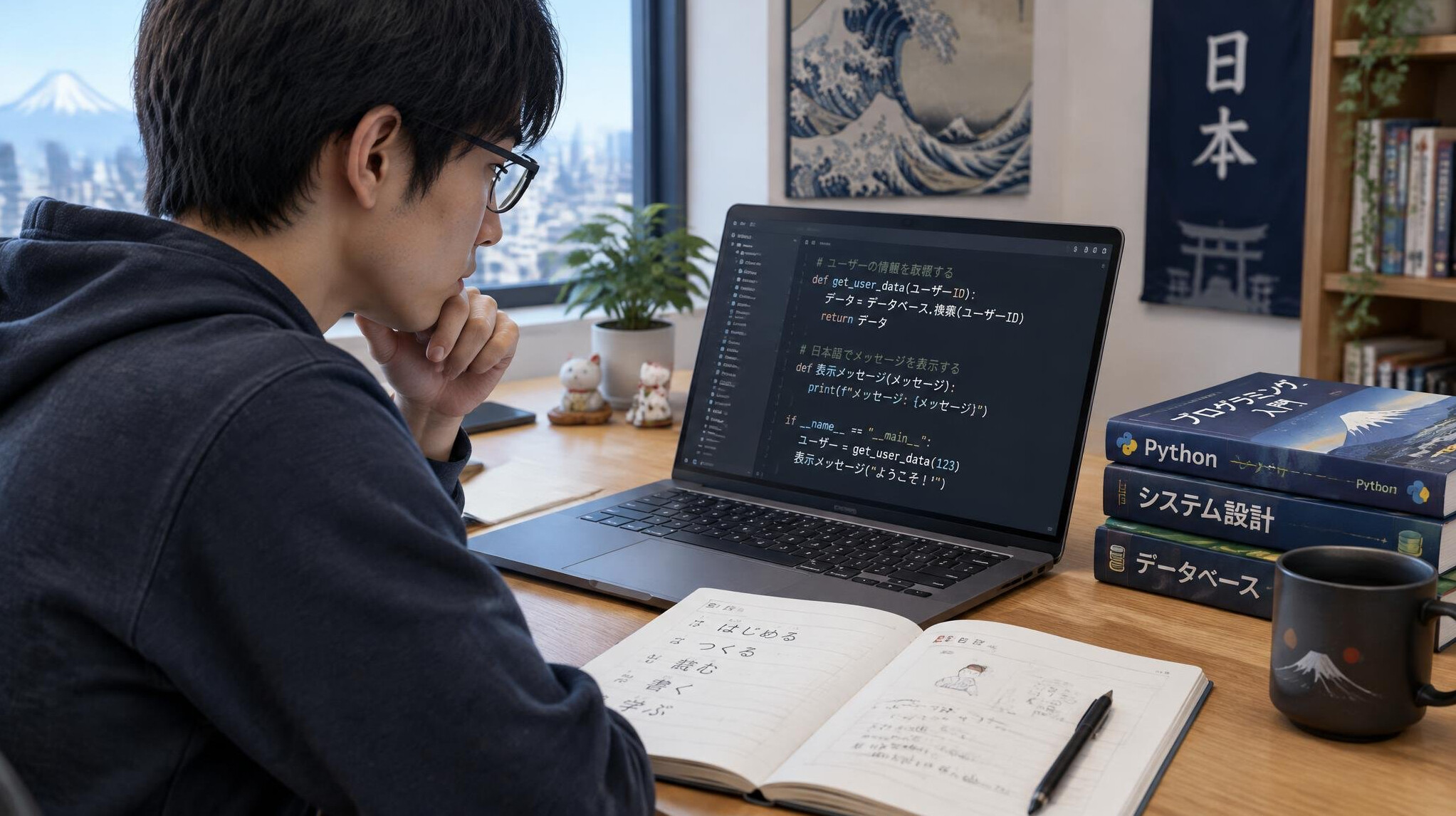
Take the story of one of our recent graduates. He started with basic Python but felt limited by English-only tutorials. After enrolling in our Japanese programming course he began reading official documentation from companies like Sony and Nintendo. The difference was immediate. Terms that once required translation apps now flowed naturally, letting him debug faster and collaborate without barriers.
Why Japanese Adds an Edge to Your Coding Journey
Japan leads in several tech sectors that reward bilingual coders. Game development, embedded systems, and automotive software often rely on internal resources written in Japanese. Learners who invest time in the language report higher confidence when reviewing pull requests or joining team meetings. It is not just about reading kanji on a screen. It is about understanding cultural nuances in how teams discuss problems and iterate on solutions.
Building Your Foundation
Start small with daily practice that ties directly to code. Memorize common terms like 変数 for variable or 関数 for function while writing simple scripts. Our courses integrate these elements so you practice both at once. Over weeks this dual approach builds retention because the vocabulary sticks when paired with immediate application in projects.

Consistency matters more than intensity. Set aside thirty minutes each morning to review flashcards focused on programming contexts. Then spend the next half hour applying those words in a small exercise. This rhythm turns abstract study into practical skill without overwhelming your schedule.
Real World Applications
Consider open source contributions to Japanese repositories. Many projects welcome English speakers but thrive when participants understand commit messages and issue discussions in their original form. One student recently fixed a localization bug in a popular library after grasping the subtle wording in the Japanese thread. That single change led to a job offer from the project maintainers.
Learning Japanese transformed how I approach problem solving. It is like gaining a second set of tools for the same toolbox.
Another advantage appears in documentation for hardware. Robotics kits and IoT devices from Japanese manufacturers often ship with manuals that skip full English translation. Reading them directly saves time and prevents costly misinterpretations during prototyping.
Overcoming Common Hurdles
Grammar can feel tricky at first, especially with sentence structures that differ from English. Focus on patterns rather than perfection. Our instructors emphasize conversational tech Japanese so students can ask questions in class and on forums. Errors become learning moments instead of roadblocks.

Community support accelerates progress too. Join language exchange groups where members share code snippets alongside vocabulary. Hearing how native speakers explain algorithms reinforces both skills simultaneously.
Over time the payoff compounds. Bilingual programmers often move into leadership positions faster because they bridge teams across continents. Whether you aim for freelance work with Japanese clients or full relocation, the combination of code and language creates unique value that stands out in any portfolio.